Post-acne marks aren't scars. They're color changes that often fade on their own with time. Treatment accelerates the fading meaningfully.
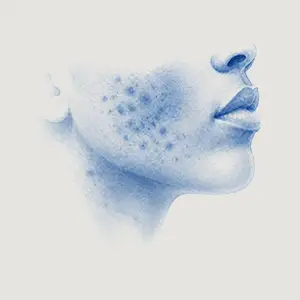
Post-acne marks are flat color changes left behind after inflammatory acne resolves. They're not scars in the structural sense (no texture change), but the color persistence is bothersome and longer-lasting than most clients expect.
Two types occur. Post-inflammatory hyperpigmentation (PIH) is brown or gray-brown, more common in medium to deeper skin tones. Post-inflammatory erythema (PIE) is red or pink, more common in lighter skin tones.
Both fade with time but treatment accelerates the timeline.
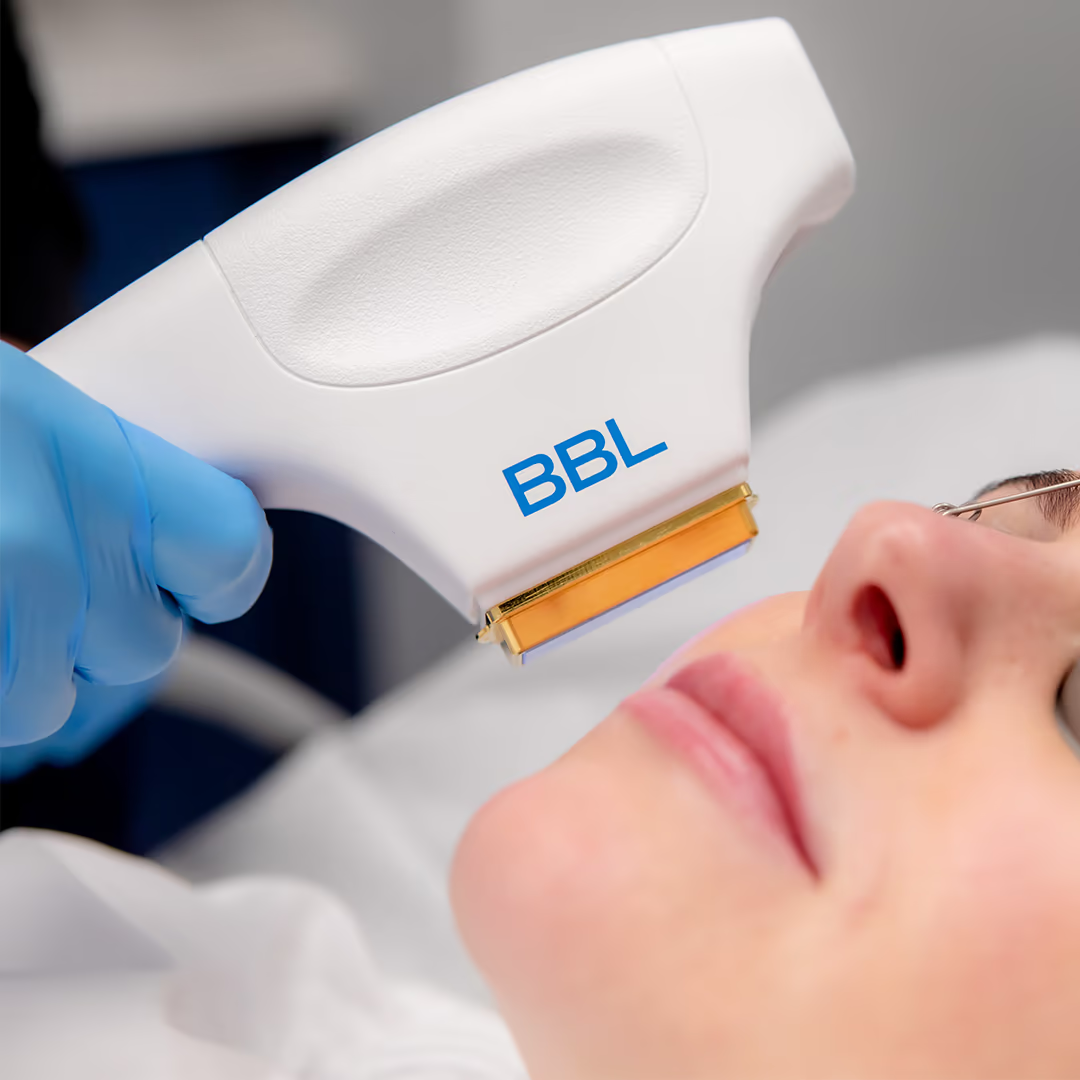
Clients come in frustrated that their acne has resolved but the marks haven't. They've often used various brightening creams without significant change. Treatment that addresses the underlying pigment (BBL for PIH, ClearV or BBL for PIE) finally accelerates the fading.
Post-acne marks form during the inflammatory response.
PIH (hyperpigmentation) develops when inflammation triggers melanocytes to overproduce pigment in the area of the resolved lesion. The melanin remains long after the original lesion is gone.
PIE (erythema) develops from dilated capillaries that remained after the inflammation resolved. The red persists until the vessels normalize.
Sun exposure deepens PIH and slows its fading dramatically.
The marks appear at sites of previous acne lesions. PIH is brown, gray-brown, or violet. PIE is red or pink.
The marks remain flat to the skin (no raised or depressed texture). Time is the main differentiator from active acne.
Both types are more visible during the first few months after the acne resolves and gradually fade.
PIH typically fades on its own over six to eighteen months without treatment, longer in clients with deeper skin tones. PIE typically fades over three to six months. Treatment accelerates both timelines significantly.
Sun exposure dramatically slows fading. Daily sun protection during the resolution period is the highest-leverage thing clients can do.
Post-acne marks respond to several modalities.
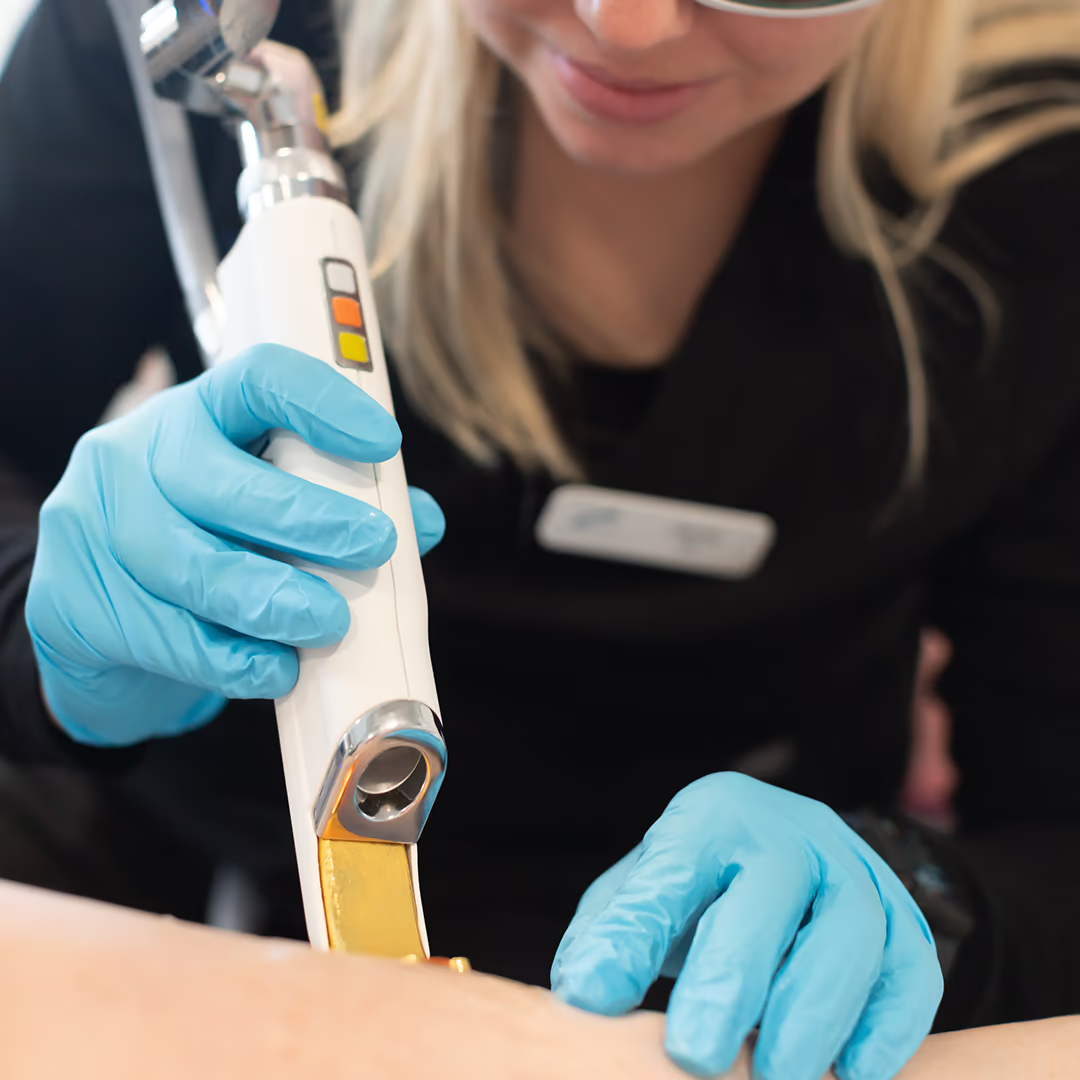
BBL or IPL targets pigment in PIH and addresses vascular components in PIE.
Brightening topicals (hydroquinone, tretinoin, azelaic acid, vitamin C) accelerate fading.
Chemical peels with glycolic, salicylic, or lactic acid resurface the affected layers.
Microneedling stimulates collagen and helps with both PIH and PIE.
We start with assessment. We confirm we're treating marks rather than scars (different treatment, different timeline).
For PIH (brown marks), the foundation is BBL for direct pigment treatment paired with medical-grade brightening topicals at home. Most clients see significant fading across two to three sessions spaced four to six weeks apart.
For PIE (red marks), BBL with vascular settings or ClearV targets the dilated vessels. Topical niacinamide and azelaic acid support fading at home.
For mixed marks, we combine both modalities.
Daily sun protection is non-negotiable. Without rigorous SPF, treatment progress is slow.
At RN Esthetics, every treatment starts with listening. We are nurse practitioners, registered nurses and estheticians who treat every client as the hero of their own story.
.png)

Had my first blood draw today with it was INCREDIBLE!!! Also the front desk were all so pleasant especially Kelsie! I highly recommend RN Esthetics!!

I was truly blown away after my appointment here. Every single person I interacted with, from the front desk to the providers who handled my treatments, was incredible! They made me feel so welcomed and cared for, and were both informative and genuinely kind. The space itself is spotless, cozy, and easily the most inviting place I’ve ever been for Botox. Michelle did my Botox and she was amazing! I also had a hydrafacial and dermaplaning, and I already can’t wait to come back again and again.You will not regret booking here!

I highly recommend RN Esthetics! The staff is welcoming, knowledgeable, and helpful without making you feel rushed. The facility is spotless and clean, which made me feel even more comfortable and confident being there. Great experience overall!