Melasma is unlike other pigmentation. It's hormonal at its core, sun-triggered, and never truly cured. Honest treatment is the difference.

Melasma is a chronic pigmentation condition that produces symmetrical brown or gray-brown patches, usually across the cheeks, forehead, upper lip, and bridge of the nose. Unlike sun spots or post-inflammatory pigmentation, melasma has a hormonal component that makes it more persistent and prone to recurrence.
Most clients with melasma will manage it for the rest of their lives. Treatment can dramatically reduce the appearance. It rarely resolves it permanently.
Clients come in having tried over-the-counter brightening products without results. They've often been told melasma is untreatable or have been treated aggressively elsewhere and seen it return darker. They want an honest plan that delivers improvement without making the condition worse.
Melasma develops from the interaction of three primary factors.
Hormones are the foundational driver. Pregnancy, birth control pills, hormone replacement therapy, and thyroid changes can all trigger or worsen melasma.
UV and visible light exposure activates melanocytes already primed by hormones. Even brief sun exposure can undo months of progress.
Heat and inflammation contribute. Stoves, hot yoga, saunas, and laser heat itself can trigger flares.
The pattern is usually distinctive. Symmetrical patches across the cheeks (malar), forehead and upper lip (centrofacial), or along the jawline (mandibular). The color is typically brown or gray-brown, with edges that fade gradually into surrounding skin.
Melasma is most common in clients with medium to deeper skin tones, particularly women in their reproductive years. It often appears during pregnancy and may or may not fade after.
Melasma fluctuates with hormonal status, sun exposure, and inflammation. It typically worsens in summer, during pregnancy, with certain medications, and during periods of stress or heat.
Without treatment, melasma typically deepens and spreads over years. With consistent treatment and rigorous sun protection, it can be brought close to invisible. The maintenance is lifelong.
The industry treats melasma with several modalities, often layered.
Topical agents like hydroquinone, tretinoin, kojic acid, and azelaic acid suppress melanin production.
Chemical peels remove pigmented surface layers.
Lasers and IPL can address pigmentation, but aggressive laser treatment is one of the most common causes of melasma worsening.
Oral tranexamic acid is increasingly used for resistant cases.
Our approach prioritizes restraint and rigorous photoprotection. Aggressive laser treatment is one of the most common causes of melasma worsening, and we treat the condition accordingly.
We start with a topical regimen. Hydroquinone in a medical-grade compound, paired with tretinoin and antioxidants, is the foundation. Daily SPF 50 with mineral filters and iron oxides (for visible light protection) is non-negotiable.
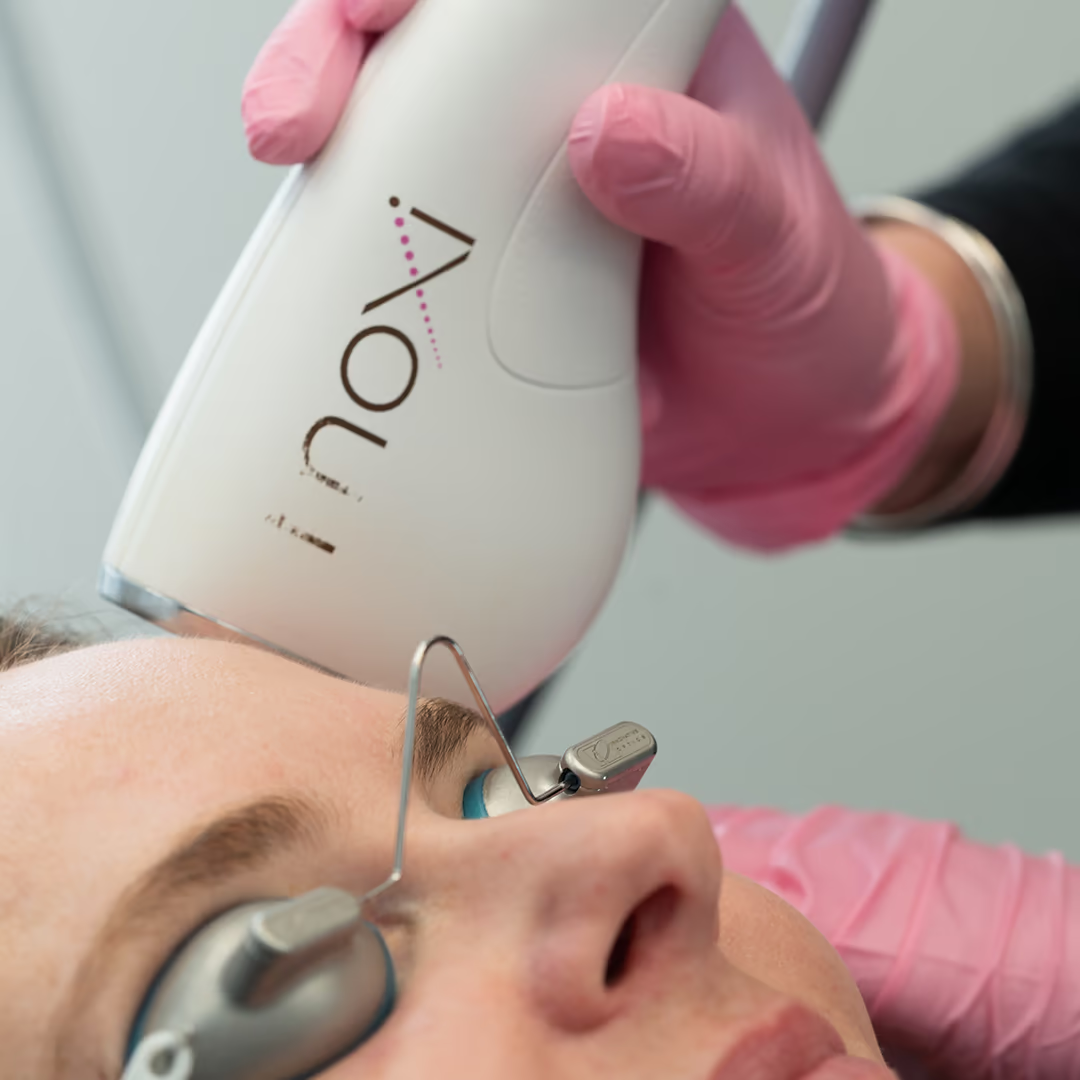
For surface support, we use gentle chemical peels and conservative microneedling. We avoid aggressive resurfacing lasers in active melasma. Moxi or low-energy gentle laser may enter conversations only when the topical plan has stabilized the condition over months.
For resistant cases, oral tranexamic acid coordinated with a dermatologist or internist can help. We're honest about what each tool can do and what it can't.
At RN Esthetics, every treatment starts with listening. We are nurse practitioners, registered nurses and estheticians who treat every client as the hero of their own story.
.png)

Had my first blood draw today with it was INCREDIBLE!!! Also the front desk were all so pleasant especially Kelsie! I highly recommend RN Esthetics!!

I was truly blown away after my appointment here. Every single person I interacted with, from the front desk to the providers who handled my treatments, was incredible! They made me feel so welcomed and cared for, and were both informative and genuinely kind. The space itself is spotless, cozy, and easily the most inviting place I’ve ever been for Botox. Michelle did my Botox and she was amazing! I also had a hydrafacial and dermaplaning, and I already can’t wait to come back again and again.You will not regret booking here!

I highly recommend RN Esthetics! The staff is welcoming, knowledgeable, and helpful without making you feel rushed. The facility is spotless and clean, which made me feel even more comfortable and confident being there. Great experience overall!